Cost of a Vacant Electrician Position: How to Calculate
There is no publicly reported time-to-fill in days for electrical occupations. If you have an installer position open and want to know what it costs…


There is no publicly reported time-to-fill in days for electrical occupations. If you have an installer position open and want to know what it costs…
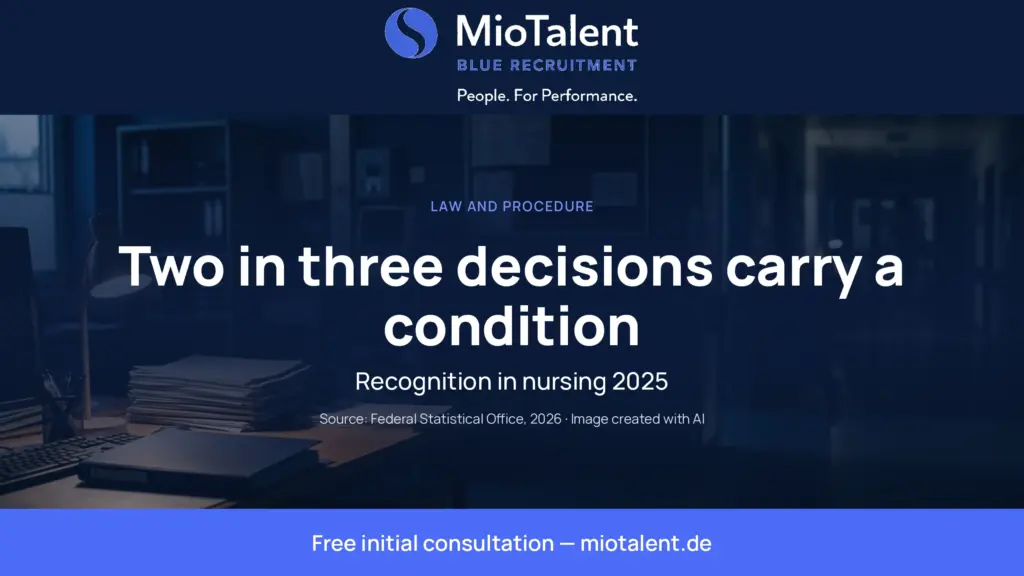
According to the figures of the Federal Statistical Office (Statistisches Bundesamt), a nursing recognition procedure in Germany almost never ends in a rejection. It also…

In early summer 2026, 36 per cent of the companies surveyed by the Association of German Chambers of Industry and Commerce named the shortage of…

Anyone wanting to hire an electrician from abroad usually hears the word recognition first — and expects months and a chamber procedure. Both are true…

Training is the only route by which a qualified nurse comes into being without a recognition procedure. It takes three years — and some contracts…

On paper, the helper level is the one part of the German care labour market that is not empty: 48,000 unemployed care workers are looking…
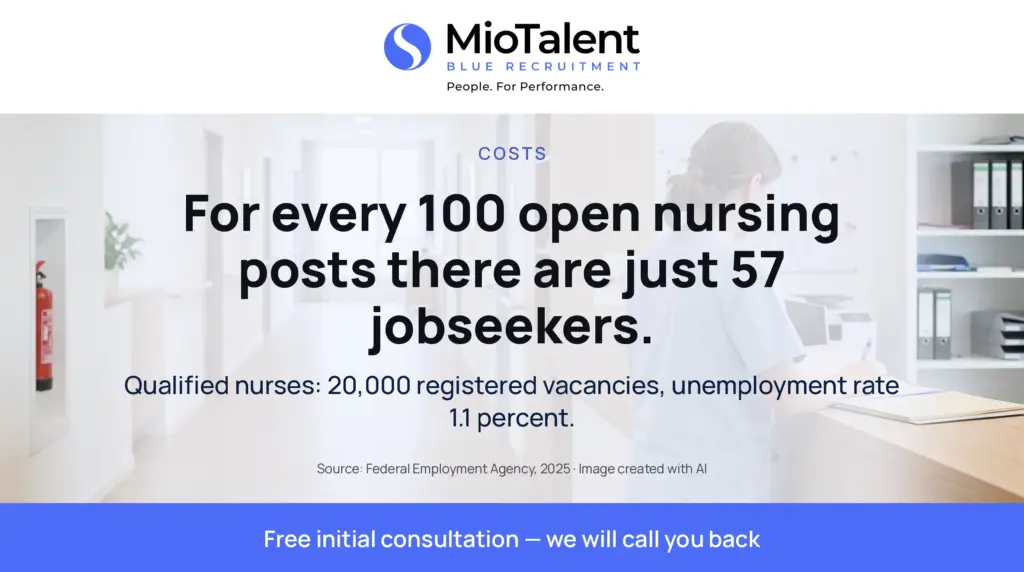
For 100 open nursing positions there are 57 unemployed. Why the domestic market cannot fill your role, what waiting costs and which two routes remain.

A1 certificate, customs notification, guarantor liability under the Posted Workers Act: which duties apply when posted workers are deployed on your site.

21,510 vacancies in building electrics, no matching candidate for three in four. Why job adverts no longer fill roles and which two routes actually do.

Training pay, practical instruction, three years of lead time: what a nursing trainee from abroad costs your organisation — and when the calculation turns.
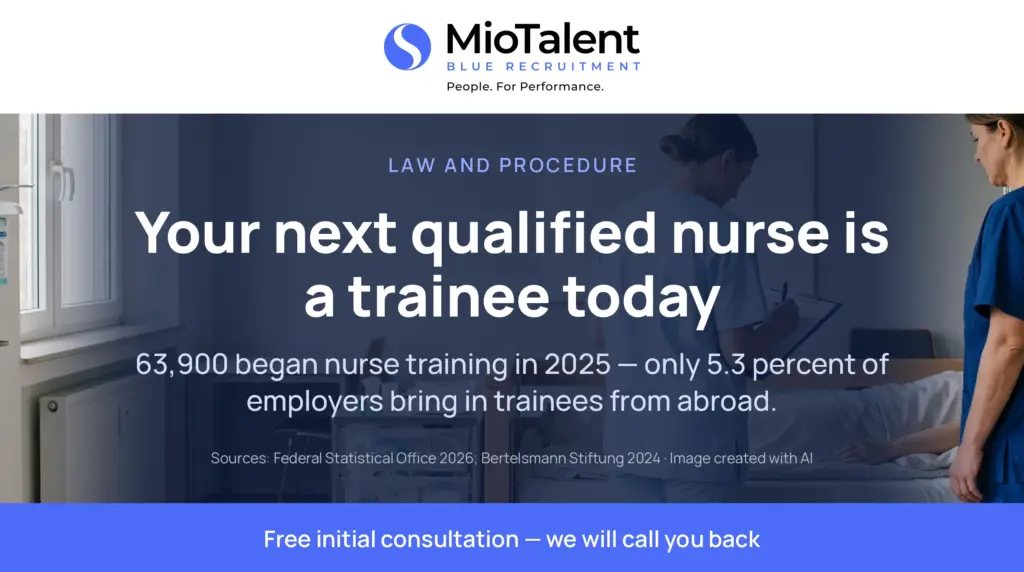
63,900 begin nurse training, only 35,300 qualify. What organisations need if they want to bring trainees in from abroad.

Rhineland-Palatinate 206 days, Berlin 134: 72 days separate Germany’s federal states. What the gap means for your workforce planning.

156 days is the average time-to-fill at helper level in Germany. What that costs cleaning, logistics and warehousing, and which route actually works.

When care facilities talk about international recruitment, it is almost always about the same thing: the fully trained nursing professional from abroad whose qualification has…
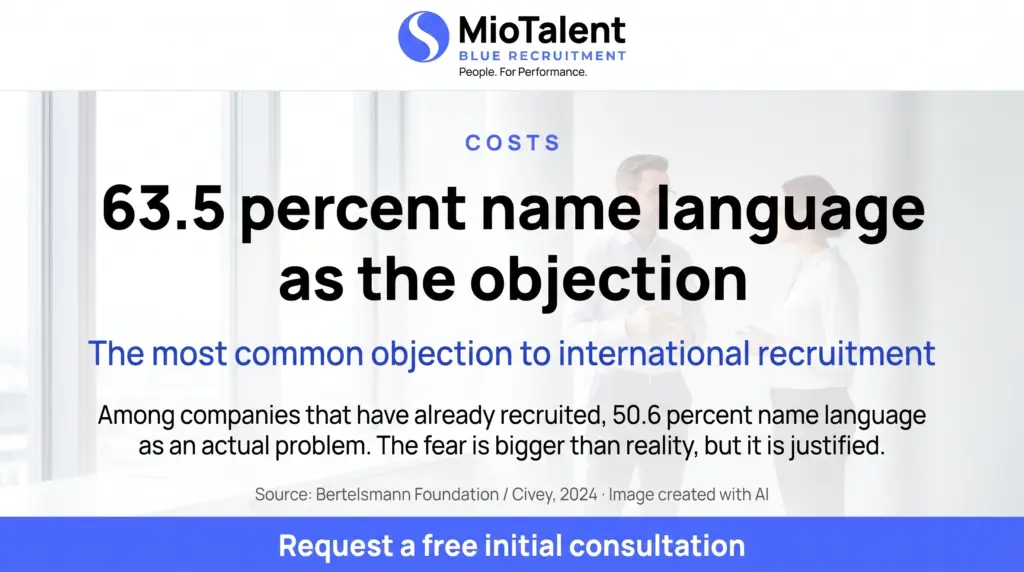
When we talk to companies about international recruitment, one objection comes up more often than any other. It usually comes not as a question but…

18 versus 16 The Federal Employment Agency reports for June 2024: the share of foreign nationals among employees subject to social insurance in nursing care…

You hire someone from abroad and wonder whether social insurance works differently than for a worker from Germany. The short answer: no. From the first…
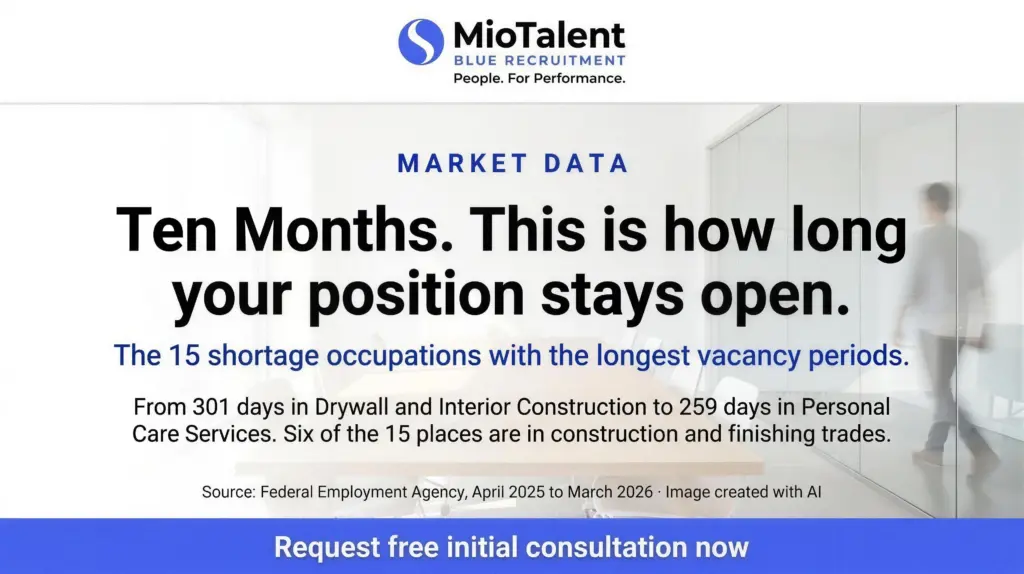
Ten months to fill a position is the norm in interior construction and drywall. The full Federal Employment Agency ranking and what follows from it.

Finishing and drywall construction has the longest vacancy period in Germany, at 301 days. A model calculation of what this actually costs a construction company.
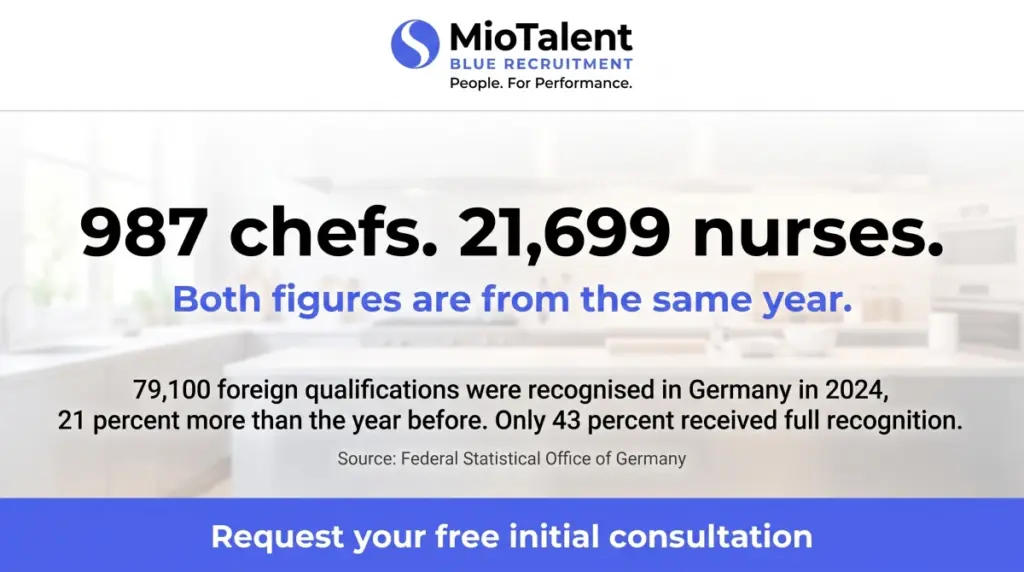
79,100 certifications in 2024, but only 987 for chefs. What the Federal Statistical Office’s data means for your staffing planning.
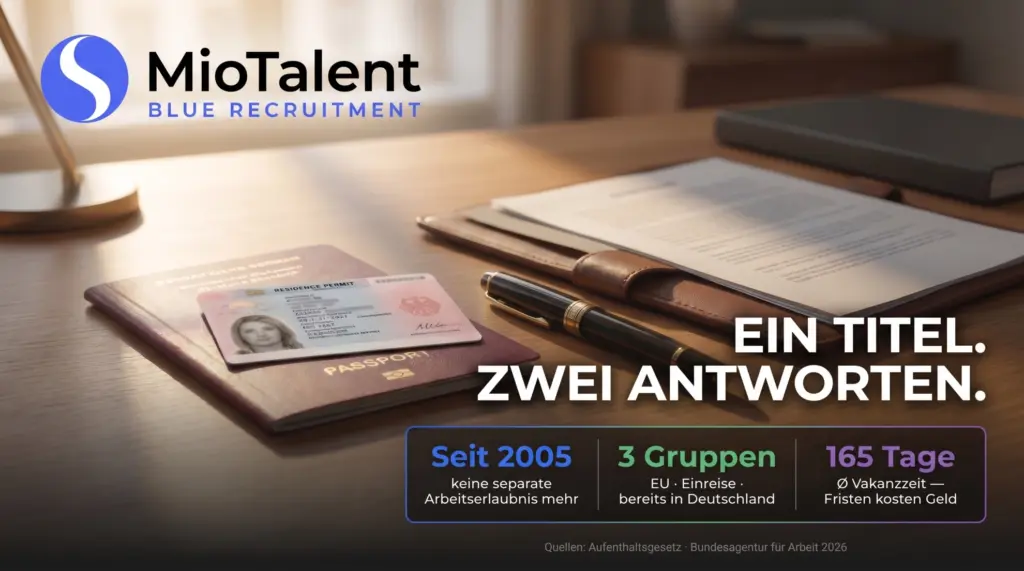
Hardly any other pair of terms causes as much confusion in international recruiting as “work permit” and “residence permit.” Companies ask for one, government agencies…
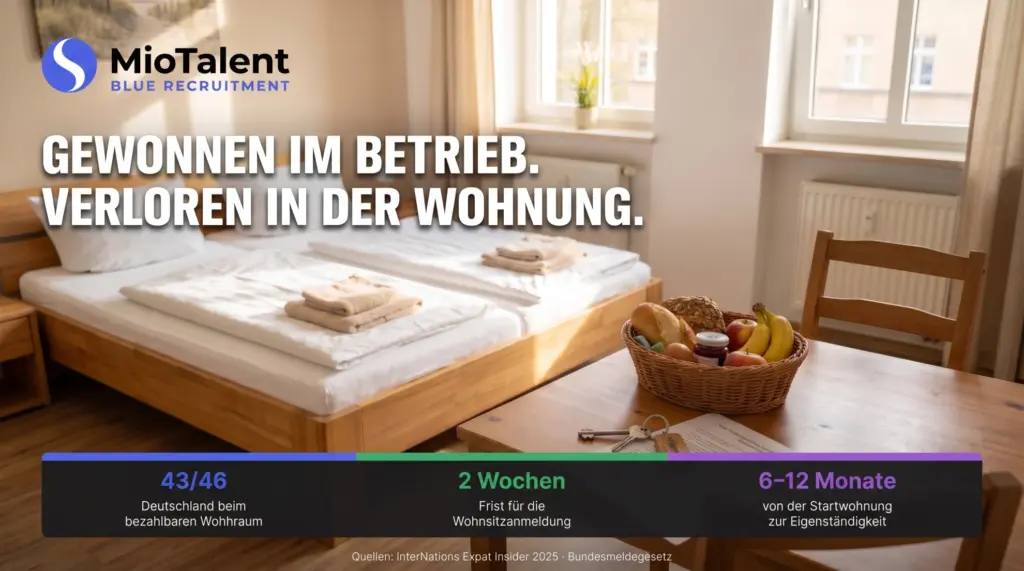
International recruitment is won in the workplace—but it’s lost at home. Hardly any single factor has such a direct impact on settling in, performance, and…
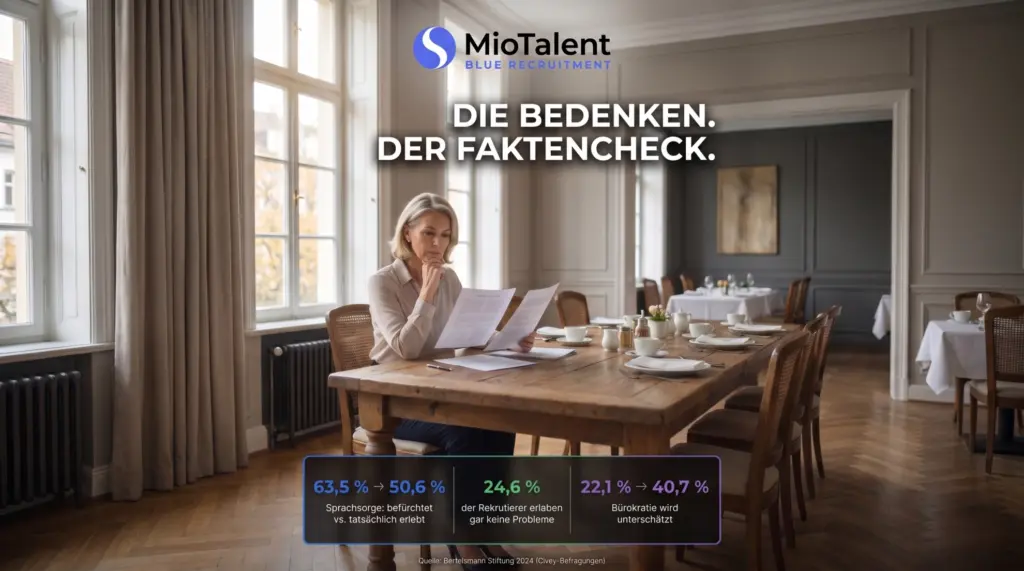
There is a pair of survey questions that every decision-maker considering international recruitment should be familiar with—and that applies to both groups. In 2024, the…

At first glance, temporary staffing seems like the simplest solution to labor shortages: make a call, order workers, pay the hourly rate, and you’re done.…

International professionals can choose where they want to work—and Germany isn’t making it easy for its companies in this regard. Employer branding for international candidates…
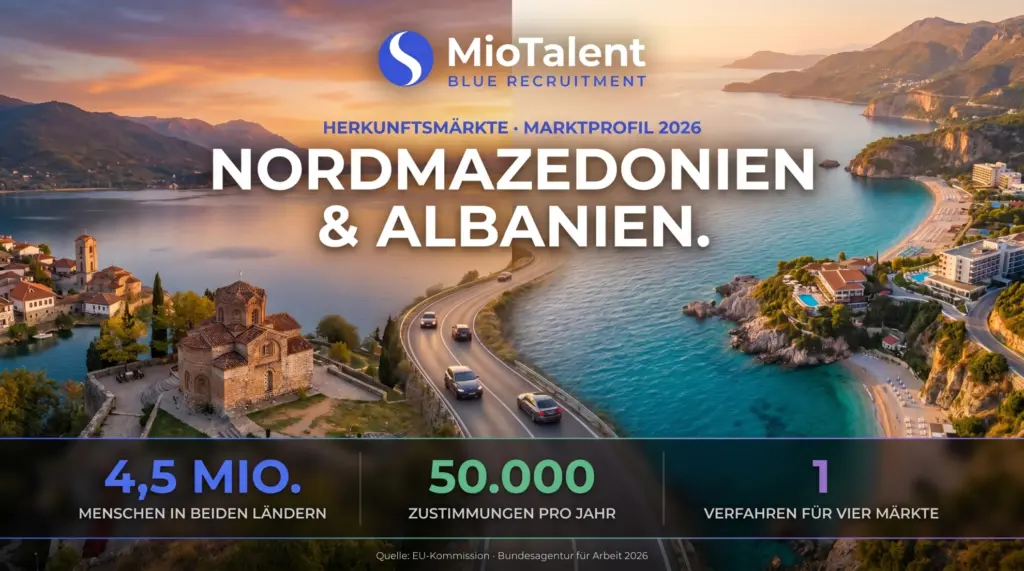
When people talk about the Western Balkans as a source market, Serbia and Montenegro are usually the first countries that come to mind. North Macedonia…

It’s the end of June, the patios are packed, and the issue of staffing for the fall seems far off. That’s exactly the mistake that…
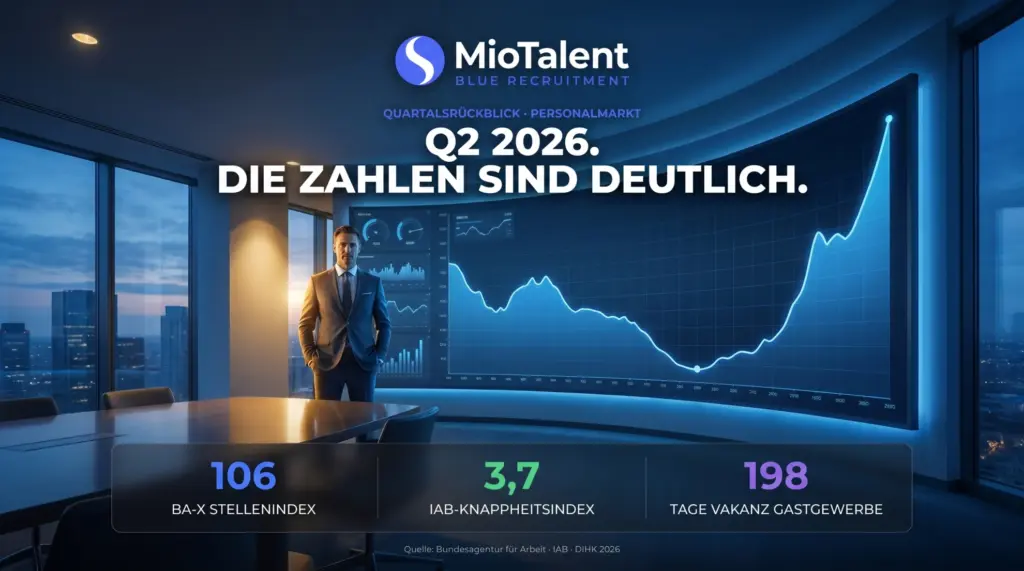
The second quarter of 2026 is coming to a close, and with it, the season of gut feelings: Anyone who wants to be staffed up…
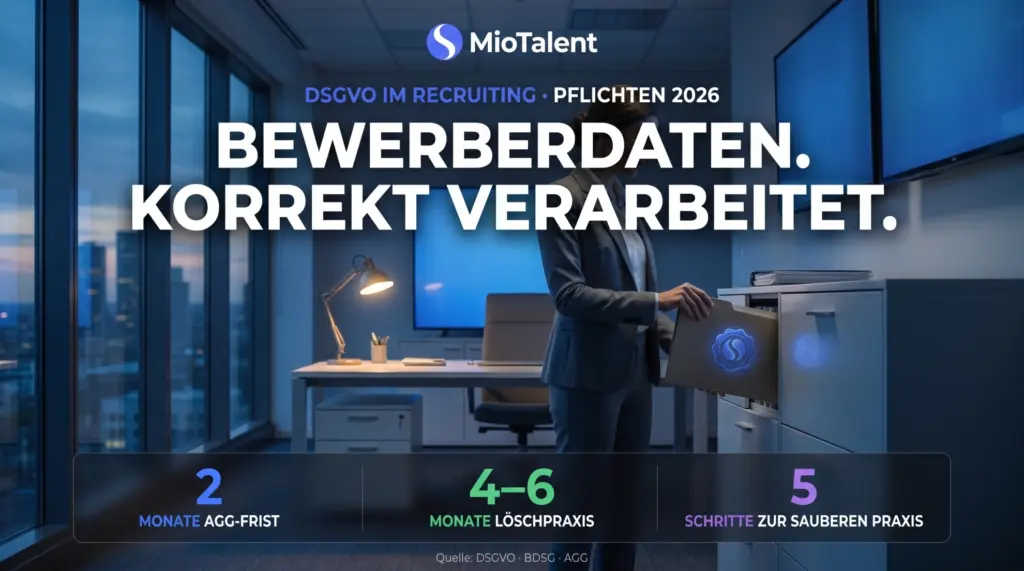
International recruiting means that resumes, transcripts, passports, and health information cross national borders—between candidates, sourcing partners, recruiters, and companies. This is precisely where the General…

Hardly any other term commands as much respect among employers as professional recognition—and hardly any other term does so without good reason. The idea of…
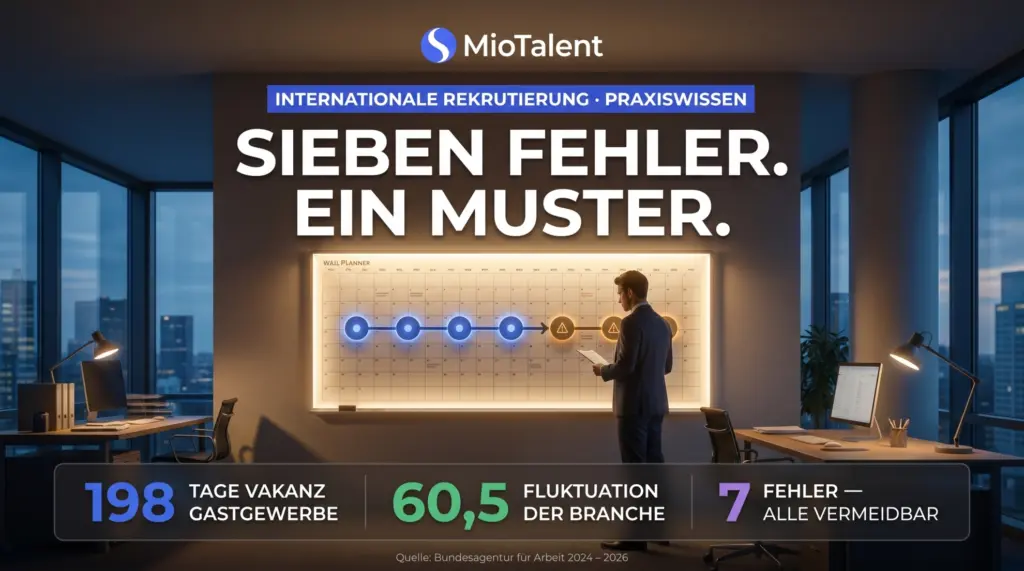
International recruitment rarely fails because of the process itself. It fails due to avoidable mistakes made before, during, and after the process. The administrative steps…

Every spring, the same question arises in the restaurant and hotel industries: Should we hire seasonal workers for the peak season or fill permanent positions…

Croatia is the exception in the region: it is the only country of the former Yugoslavia that is already an EU member. For German employers,…

After the question about costs, this is the second most common question asked during the initial consultation: How long will it take? The honest answer…
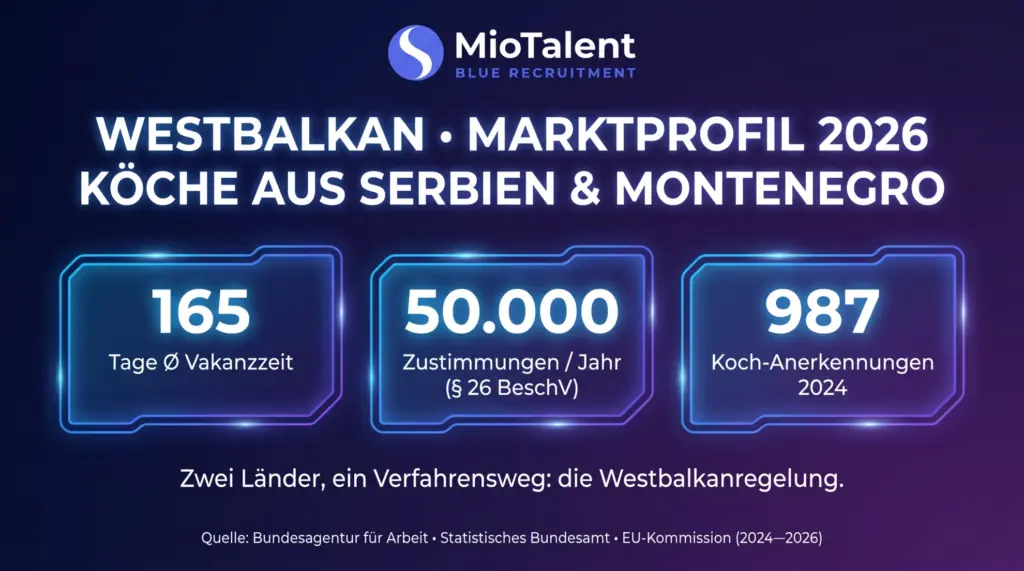
Chefs and Service Staff from Serbia and Montenegro: What qualifications are typical, what is the training tradition, and what can restaurants expect?
What documents do you need to hire a foreign professional? A complete checklist, from a passport to a Social Security number.

The first question in an initial consultation is almost always the same: “How much does it cost?” It’s a valid question, but it’s almost always…

Anyone looking to fill a position internationally must first navigate the legal landscape. The Skilled Worker Immigration Act, the Western Balkans Regulation, and recognition—three concepts…
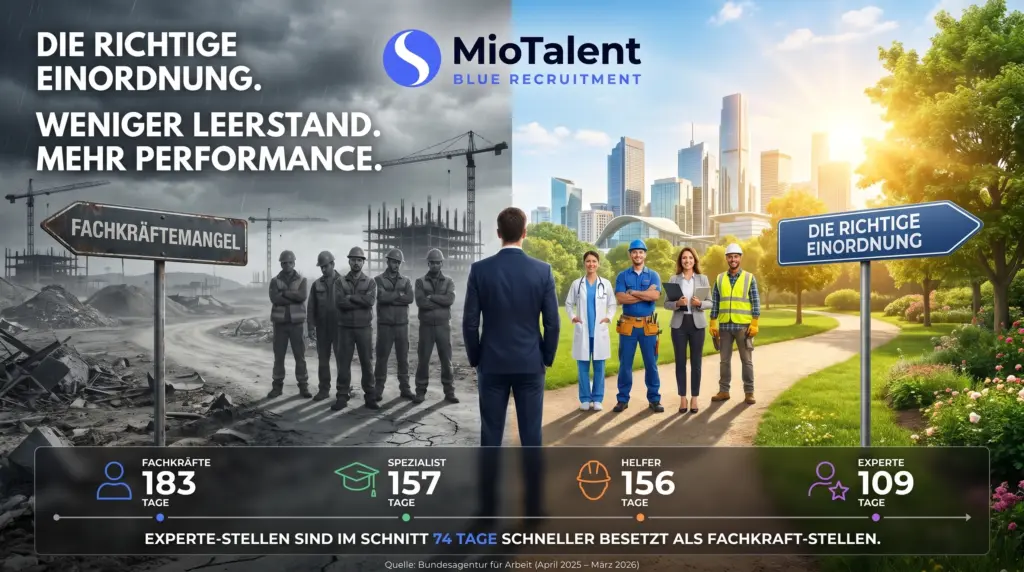
Anyone recruiting internationally for the first time will quickly come across four terms: assistant, skilled worker, specialist, and expert. They sound like a hierarchy. In…
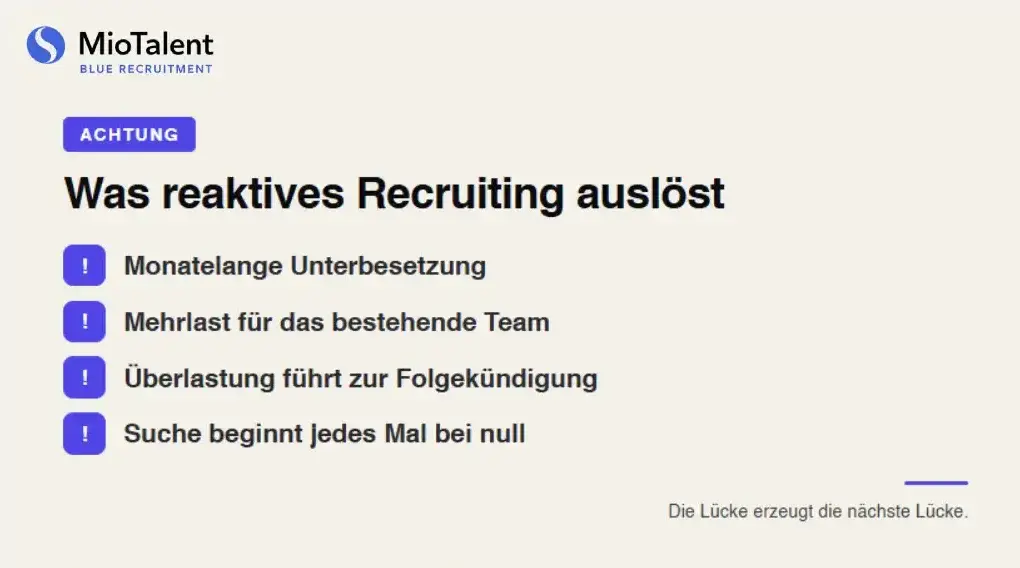
Most businesses in the restaurant and hotel industries recruit reactively. An employee quits, a position opens up—and only then does the search begin. This reflex…
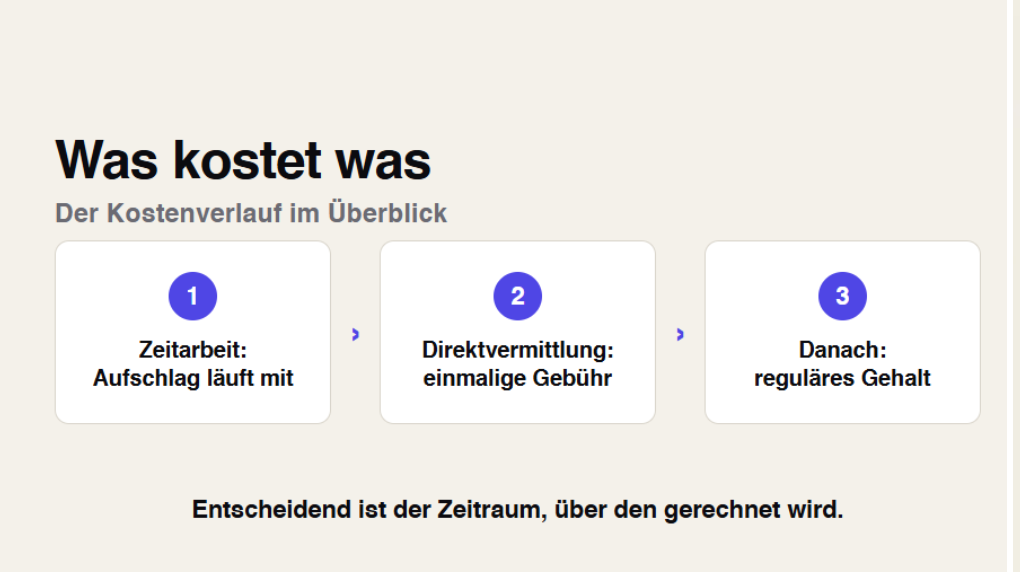
Temporary staffing or direct recruitment: What are the costs, what kind of commitment does each option entail, and what works best for the restaurant and…
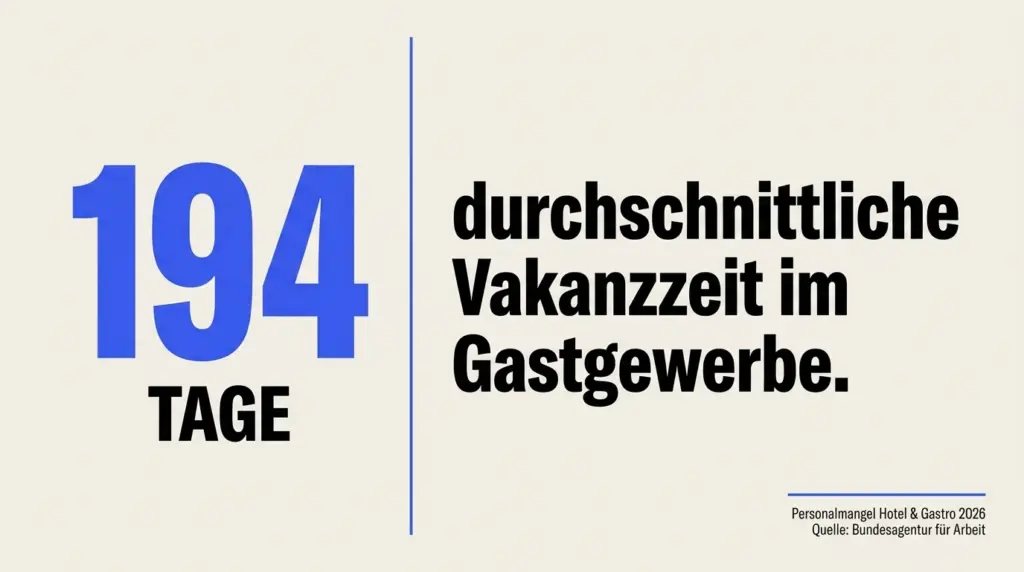
Anyone running a restaurant or hotel business in Germany in 2026 is familiar with the operational reality: Job openings remain unfilled for longer than they…
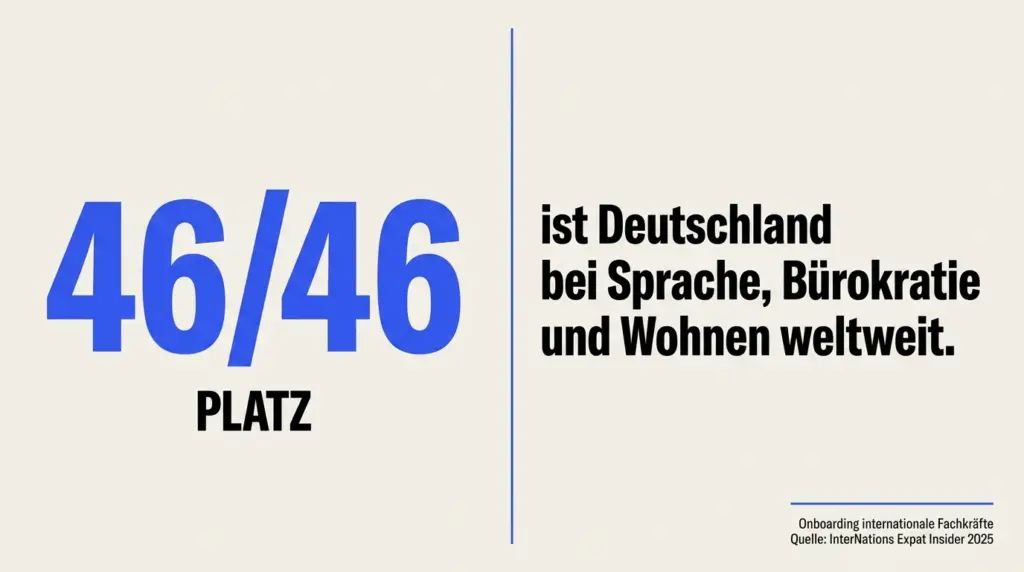
Most businesses in the restaurant and hotel industries completely underestimate one aspect of international recruiting: what happens after hiring. The contract has been signed. The…
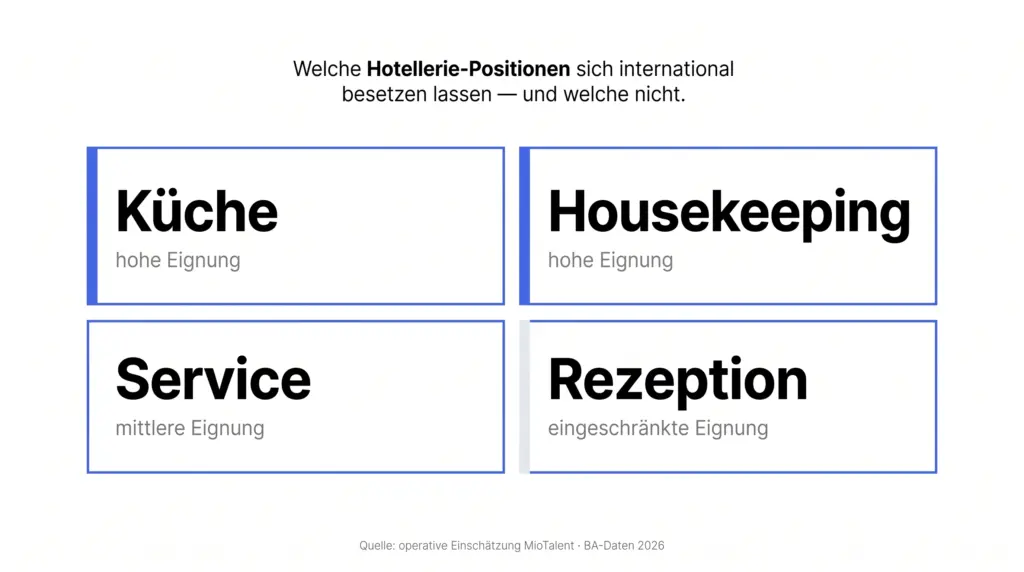
Not every position in a hotel is equally well-suited for international recruitment. This isn’t a question of the candidates’ quality—it’s a question of how well…
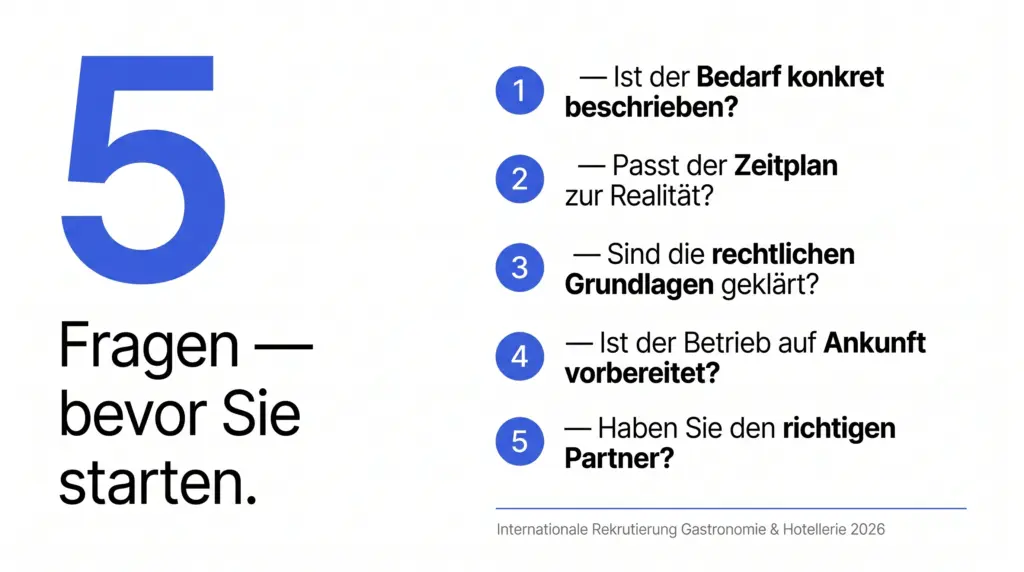
Many companies begin their international recruitment process with an initial meeting with a recruitment agency. That’s too late. The decisions that determine success or failure…
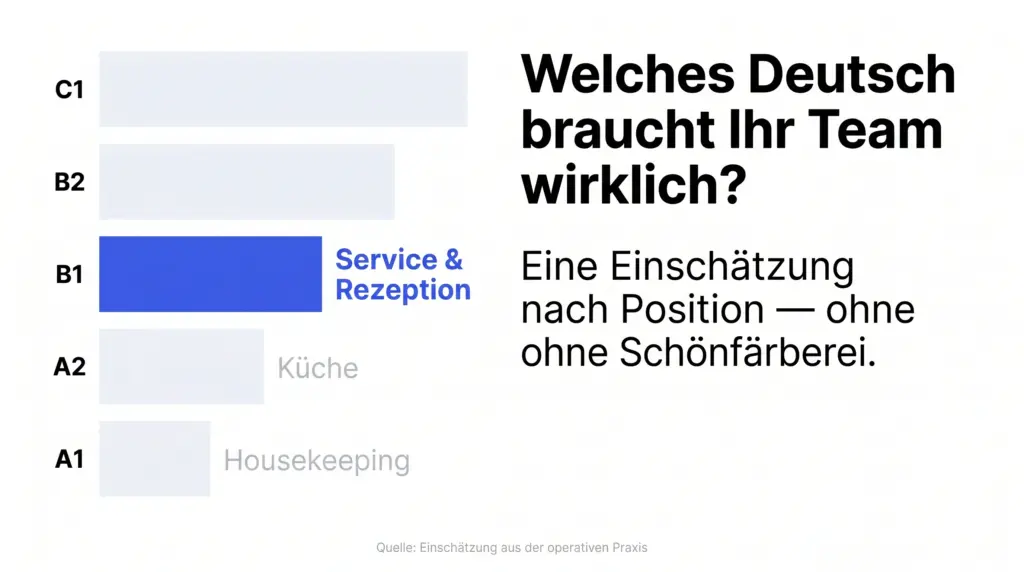
Anyone recruiting international professionals for the restaurant and hospitality industries will quickly run into the language issue. How well does someone need to speak German…

When you hire a recruitment agency, the first question you ask is: How much does it cost? The more honest question would be: When does…
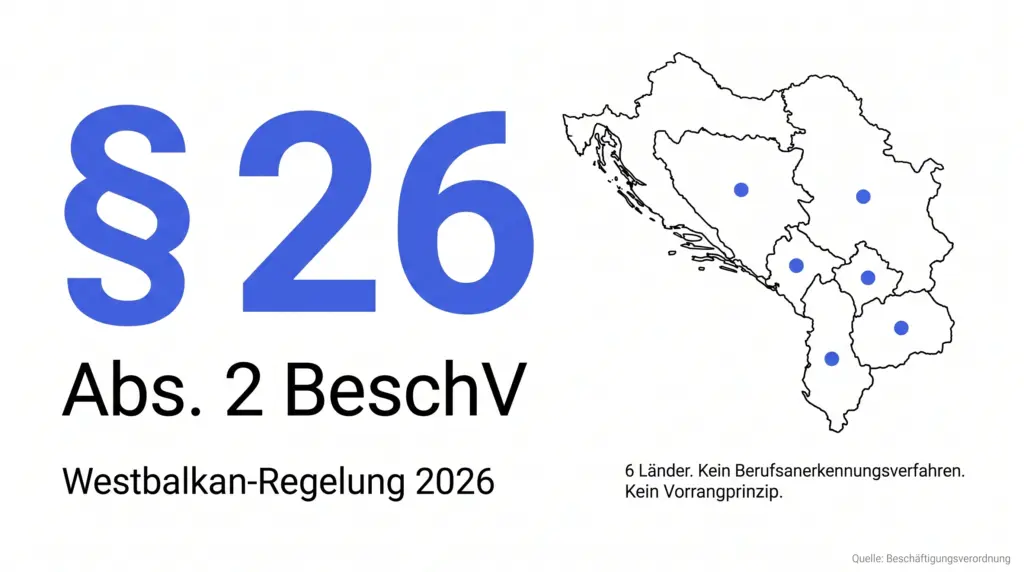
The Western Balkans Regulation is the most practical procedural pathway available to Germany for international recruitment in the commercial sector. No professional recognition process, no…
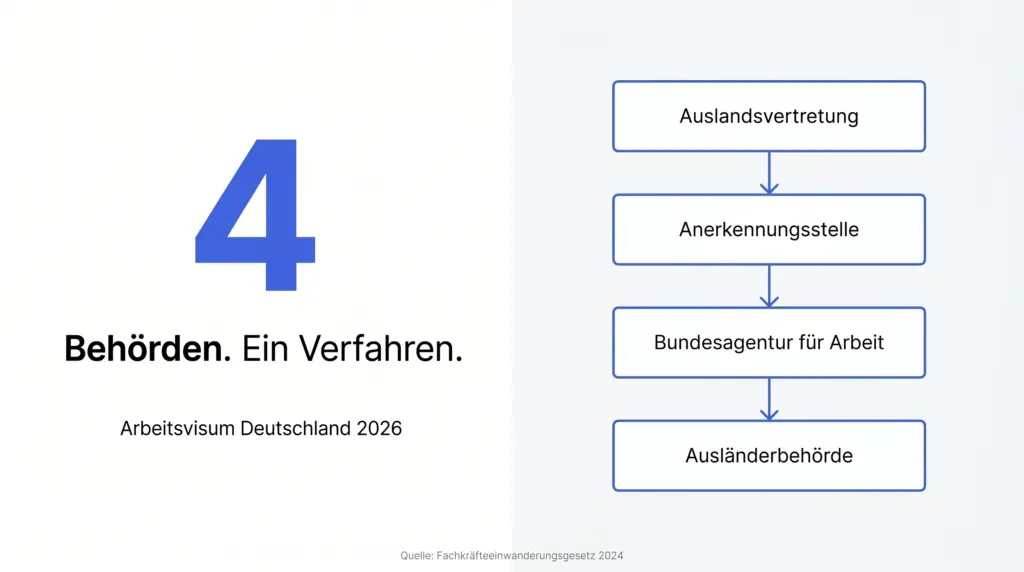
For many employers, the work visa is the biggest unknown in international recruiting. Not because it’s particularly complicated—but because it involves several departments that don’t…
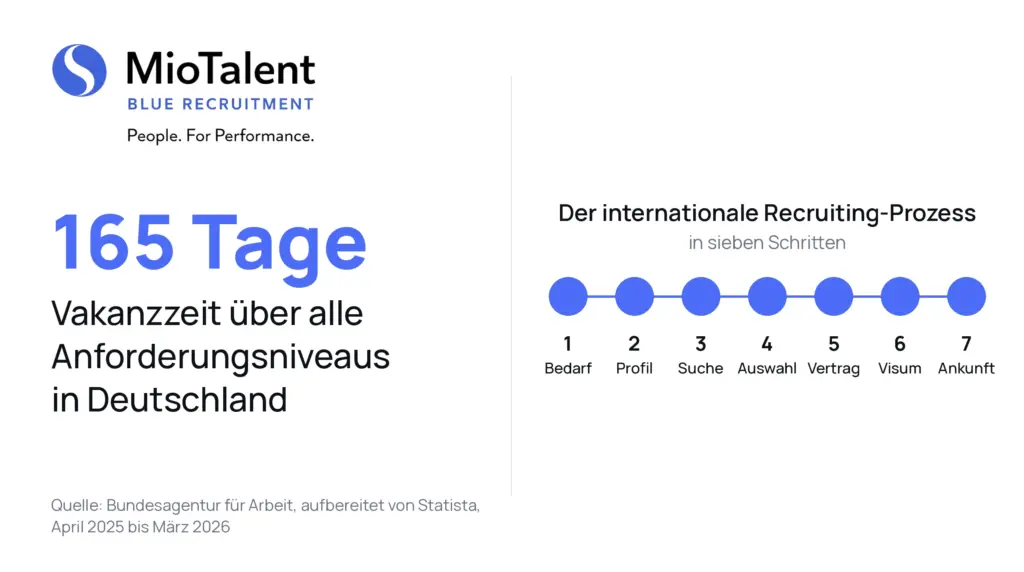
International recruitment can’t be explained in a single sentence. It follows a process—and that process determines whether it ultimately results in a hire or a…

No applications. The position remains open. The team steps in. Business continues—somehow. This scenario is no longer an exception in the German restaurant and hotel…

When German businesses consider international recruitment, sooner or later the term “Western Balkans” comes up. And rightly so. The region is one of the most…
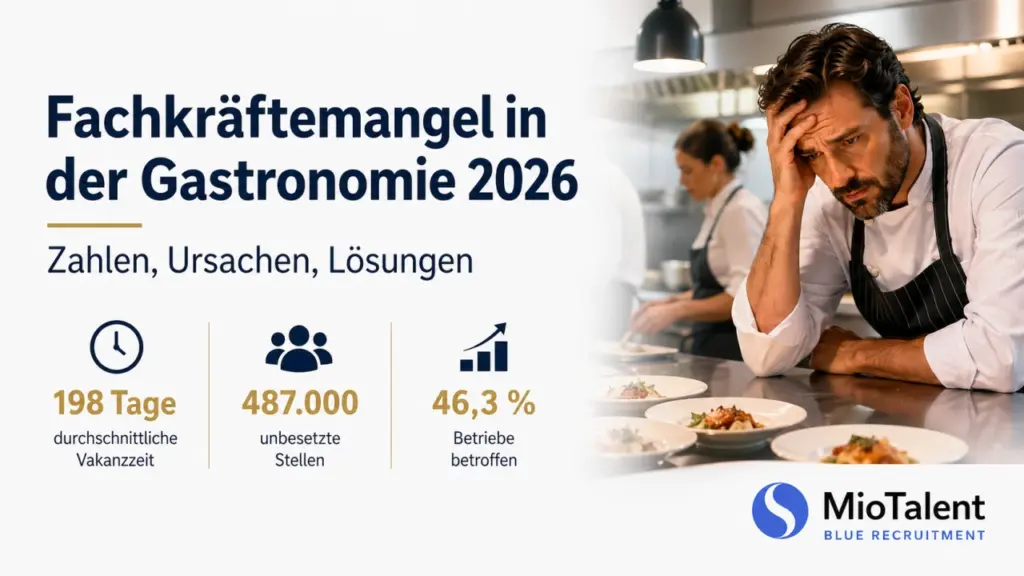
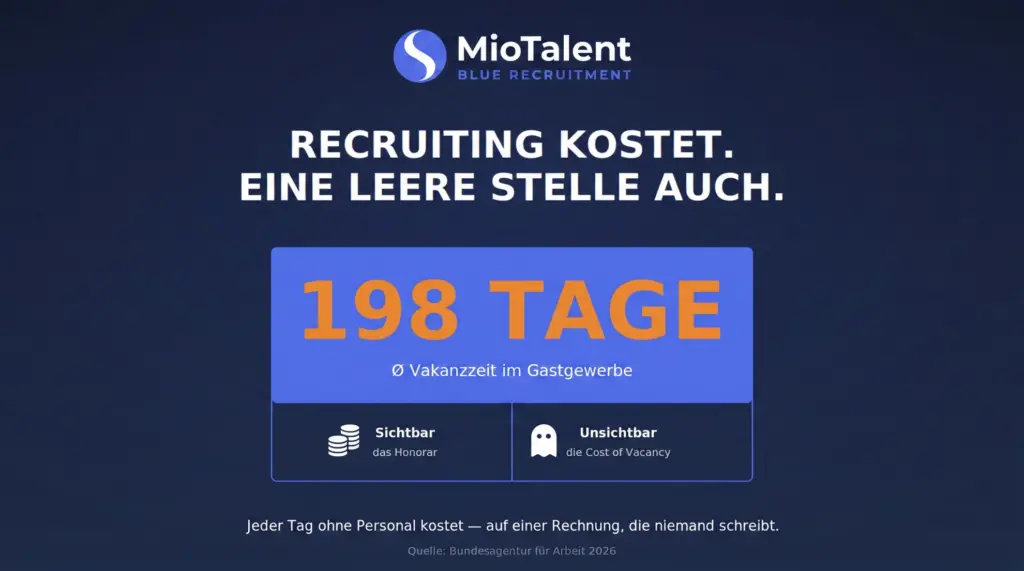
The numbers are known. Yet the positions remain unfilled. 198 days—that’s how long it takes on average in the hospitality industry to fill a job…

Vacancies have become part of everyday life at many companies. A skilled worker is missing, the search is underway, the team steps in, and operations…

Many companies are now taking international recruitment seriously. The reason is simple: Vacancies often can no longer be filled locally within the required timeframe or…

International recruitment is neither a panacea nor an exception. For many companies, it has become a sensible way to systematically address staffing shortages. The key…

The term “skills shortage” is often thrown around. However, it does not always accurately explain why positions remain unfilled. In many companies, the real problem…